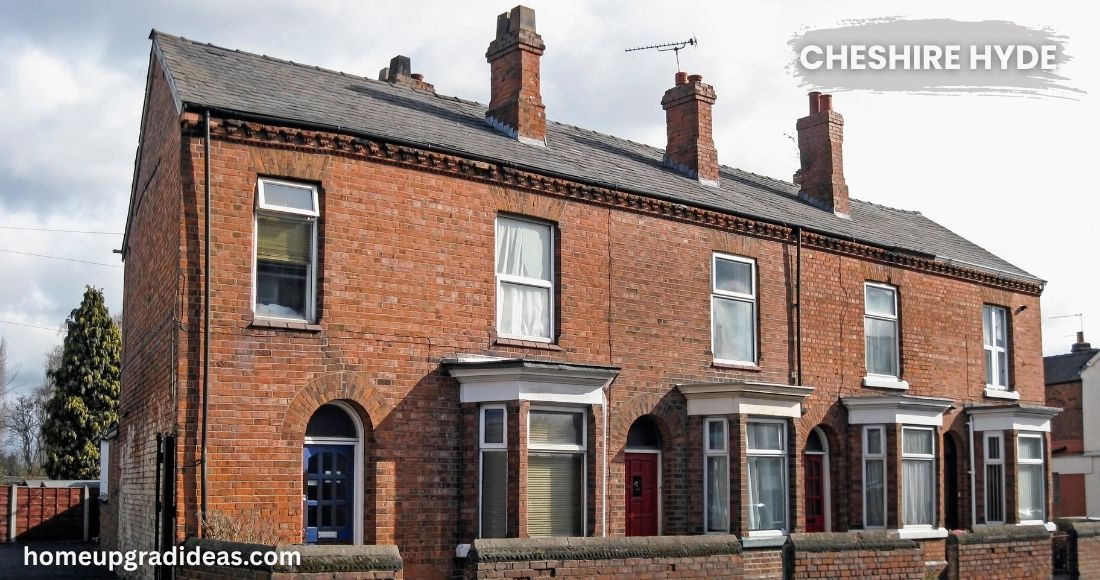
Cheshire Hyde sits quietly on the edge of Greater Manchester, yet it holds far more character than most people expect from a small northern market town.
I have spent years exploring Cheshire Hyde, and every visit still uncovers something new, from old mill buildings to peaceful canal paths nearby.
This town blends industrial history with genuine green spaces, giving visitors a rare mix of heritage, nature, and everyday northern charm in one place.
Families, walkers, and history lovers all find something worthwhile here, whether that means a quiet park stroll or a proper look at old Victorian architecture.
Cheshire Hyde also works as a smart base for exploring the wider Peak District, since major trails and reservoirs sit just minutes away by car.
In this guide, I share honest, first hand insight into the town’s landmarks, food, events, and hidden corners that most visitors never think to explore.
What Is Cheshire Hyde?
I have walked through Cheshire Hyde more times than I can count, and this market town never stops surprising me with its rich cultural identity. Sitting along the River Tame on the edge of Greater Manchester, this historic town blends rural tranquility with real urban excitement.
You get local parks, quiet canal walks, and deep heritage roots that pull in walkers and families from across northwest England. Once you spend a weekend in Hyde, you understand why people treat it as a natural gateway to the Peak District.
Back in 1887, John Bartholomew described the town in his Gazetteer of the British Isles. He listed it as a mun.bor., a township under Stockport, sitting 7½ miles from Manchester in E. Cheshire, roughly 180 miles from London.
Old records show 3412 ac, a population of 28630, and a smaller township of 897 ac holding 17876 people, served by 2 Banks and 2 newspapers, with Market day falling on Saturday. The town owed its rise to cotton manufacturers.
Local water power and coal supply ran busy factories for weaving and spinning, alongside ironfoundries, engineering works, and a solid trade in felt hats. Modern records from Tameside place the town at Grid Ref SJ 953 947.
Werneth Low sits separately at SJ 963 935, and local photographs date to 13 May 2009, 26 May 2009, and 28 Feb 2006. The historian Pevsner called it a proper cotton town, and I still think that label fits today.
By the 2001 census, 31253 people called Cheshire Hyde home, at Grid reference SJ945945, 53°26’51″N, 2°4’55″W. Its Post town stays Hyde, the postcode reads SK14, and the dialling code is 0161.
The Council running things is Tameside, inside the Stalybridge and Hyde constituency, just five miles from Stockport and seven miles from Manchester, on the edge of the wider conurbation near Cheshire Hyde.
Town Hall
Every time I pass the Town Hall, I remember the 1937 addition and the portico by J.H. Ward. The main building rose between 1883 and 1885 under J.W. Beaumont, with the extension added later on Greenfield Street.
Inside the clocktower, the bell known as Owd Joss, or Old Josh, honours Joshua Bradley, a former mill worker who rose to mayor. The clock still rings the Westminster Quarters, the same melody as Big Ben.
That tune actually traces back to King’s College Cambridge, long before it became famous in Westminster. This spot on the market place stays busy with weddings and events through the year.
It remains the clearest landmark on any tour through Cheshire Hyde, right beside the shopping precinct. Locals still gather here for civic occasions and photographs.
I always tell visitors to start their walk here, since the Town Hall anchors the whole town centre visually and historically.
Hyde Market And Town Centre
Hyde Market sits at the centre of daily life, with the market square and surrounding shops offering fresh produce, baked goods, household items, and clothing from busy stalls.
This open air market still carries a traditional northern character, and nearby independent shops, cafés, and essential amenities give locals everything close to Clarendon Square.
I remember when the outdoor market ran busier than the tin sheds you find today. Walking through, I noticed empty shops turned into a charity shop, a pound shop, or a quiet cafe.
Many banks stayed closed for good, yet the indoor market actually felt busier. Shops like Jer Jewelers and a long running fishing tackle shop doing engraving on trophies show real loyalty.
Nearby, a travel agent survives near a former Thomas Cook, and pubs like Wetherspoons, the Albion, and the Bell pub sit close to KFC, Asda, B&M, and Food Warehouse.
Older residents recall when this street held real antique shops instead of boarded up fronts, restaurants, takeaways, and curry houses, back when cash converters and Mel Travel shared space under a hot glass roof.
Chartist Memorial
The bronze figures outside the Town Hall, created by Stephen Broadbent, were unveiled on 28 November 2002 to honour the Chartist movement in Cheshire Hyde.
Back in the 1840s, the Chartists pushed for universal suffrage for men 21 and over, a secret ballot, paid MPs, no property requirement for candidates, and equal constituencies.
They also wanted a yearly general election, and today we enjoy votes for women, a freedom they never lived to see themselves in their own lifetime.
That same spirit of ordinary people rising up echoes in the story of Owd Joss, or Old Josh, named for Joshua Bradley, a poor child worker.
He became mayor of Hyde, proving the town has always rewarded quiet determination over privilege, right from its industrial beginnings.
Parks Canals And Outdoor Escapes Around Cheshire Hyde
Werneth Low Country Park, just south of Cheshire Hyde, gives you the best panoramic views across Manchester, Cheshire, and even North Wales on clear days.
Walkers, runners, and dog owners love the peaceful trails crossing open moorland, woodlands, and grassy slopes, especially in early morning light when the trails stay quiet.
At the summit, the Hyde War Memorial honours fallen soldiers from the Great War, kept by a local trust remembering losses across two World Wars, recording 710 names.
The nearby Hyde Cenotaph adds another quiet stop for anyone watching the sunsets roll in over the Pennine hills, a moment I never get tired of photographing.
The Peak Forest Canal and Ashton Canal wrap around town with peaceful towpath walks and cycling routes left over from the industrial era.
These tranquil corridors now support nature and leisure, connecting Cheshire Hyde to Stalybridge and Marple, right up to the Peak District boundary through quiet canal side paths.
The canal runs from Ashton under Lyne through Woodley and Romiley, passing Captain Clarke’s Bridge, once named Wood End Canal Bridge, at the end of Woodend Lane.
Hyde Park
This municipal green space near the town centre offers ornamental gardens, a classic bandstand, tennis courts, and a well kept children’s play area.
Families use it for a leisurely stroll or a full family outing, and through summer, the park hosts summer events and lively fairs every season.
I have brought my own family here plenty of times, and it always feels calmer than the busier attractions further into Cheshire Hyde.
The gardens stay well maintained year round, making it a reliable choice whatever the weather looks like on the day.
Godley Reservoir And Hartshead Pike Walks
Godley Reservoir and its surrounding woodland paths give you gentle low key walks right on the edge of town, perfect for a quiet afternoon.
For a bit more elevation, the climb up Hartshead Pike rewards you with sweeping views across Greater Manchester and the Pennines.
That old tower, standing since the 19th century, remains a proud local landmark among regular walkers who visit throughout the year.
Locals treat this walk as a proper test of fitness, and the view at the top always feels earned after the climb.
Industrial Heritage And Early Histroy Of Cheshire Hyde
Cheshire Hyde grew almost entirely from cotton mills and textile production through the 19th century, and you still feel that working class roots in the streets today.
Local cotton manufacturers relied on water power and coal supply to run factories for weaving and spinning, alongside ironfoundries and engineering works.
At one point, the town held 40 working mills, but by 1872 only 27 remained, and half closed between 1921 and 1939, leaving just 1 working mill standing today.
Families like Sidebotham, Hibbert, and Horsfield owned many mills, while the Ashton family ran a combined spinning and weaving company across generations.
Many old mills converted into apartments and business spaces, though plaques and public art still mark where they once stood proudly in the townscape.
The Portland Basin Museum in Ashton under Lyne explores this industrial history in far greater detail than any single article could offer.
Hyde Chapel on Knott Lane in Gee Cross stands out as an unusual Unitarian Chapel built in the style of a parish church, raised between 1846 and 1848.
Tameside History And Heritage

Designed by architects Bowman & Crowther, the chapel stood as the region’s first Nonconformist church built in this style a true architectural milestone.
The Free Library, from 1899, carries the town’s shield and its motto Onward, while St George’s Church, built in 1832, served as a chapel of ease.
That church answered to St Mary’s Stockport and came from the vision of John Hyde Clarke of Hyde Hall, later becoming a full parish church by 1842.
Later additions include a lychgate, a boathouse, a hearse house, parish rooms, and several vicarages, alongside a 110 foot tower holding eight bells.
Across the decades, the Ashton family strengthened the link between the town’s religious and industrial heritage by building a chapel on Stockport Road.
Geography
The River Tame separates Cheshire Hyde from Denton, Lancashire, acting as a tributary of the River Mersey that shapes the whole valley.
Several suburbs surround the town, including Gee Cross, Newton, Hattersley, Godley, Flowery Field, and Kingston, each with its own distinct character.
I find each suburb worth exploring separately, since they carry slightly different atmospheres despite sitting so close together geographically.
Early History
Newton Hall was already standing here in the 13th century, and it formed part of the township within the parish of Stockport, St Mary.
The name comes from the hide, a historic unit of land taxation originally intended to sustain a single peasant household, which was later standardized at 120 acres.
By the late 18th century, the future town centre was just Red Pump Street, while Gee Cross stayed the larger settlement of the two.
Hyde Hall estates along the banks of the Tame held the name almost alone, with only 3,500 inhabitants counted in 1801, right before the Industrial Revolution changed everything.
Notable Events And Local Culture In Cheshire Hyde
The Hyde Colliery suffered a devastating explosion in January 1889, killing 23 miners, and the following month, an enquiry was held right at the Town Hall.
That tragedy led Ardwick AFC, now Manchester City, to play Newton Heath, now Manchester United, under floodlights at Belle Vue to raise money for victims’ families.
It marked the first floodlit match either club ever played, watched by 10,000 people, a detail football historians still reference today with real interest.
Decades later, Myra Hindley and Ian Brady were arrested during the 1960s on the Hattersley Estate, tied to the murder of Edward Evans, a 17 year old.
More victims were later found buried on Saddleworth Moor, and their house on Wardle Brook Avenue was eventually demolished to stop it becoming a sightseeing target.
In 1998, Dr Harold Shipman, a local doctor, was exposed as a serial killer responsible for several hundred victims across Cheshire Hyde.
His first known victim, Sarah Hannah Marsland, an 86 year old from Ashton House on Victoria Street, died on 7 August 1978, through to Kathleen Grundy on 24 June 1998.
20th Century Notable Figures
Shipman actually came from Nottingham and once lived in Yorkshire, while Hindley grew up in Gorton, Manchester, before both settled near Cheshire Hyde.
I still find it strange that his old surgery now houses the cheerful Freedom Dance studio, a small but meaningful shift in the building’s story.
These events shaped the town’s reputation for decades, though modern Cheshire Hyde has clearly moved forward with fresh community energy.
Hyde In Fiction
In the BBC television drama Life on Mars, the character Sam Tyler transfers from C Division Hyde to City Centre, A Division CID.
The choice of Hyde hints that his 1973 self acts as an alter ego, nodding to Robert Louis Stevenson and his Strange Case of Dr Jekyll and Mr Hyde.
Separately, the film Yanks, from 1979 and starring Richard Gere, filmed its famous dance scene inside the ball room of Hyde Town Hall.
Sport
Ewen Fields stands as home to Hyde FC, while Cricket fans follow the Hyde Cricket and Squash Club and Flowery Field Cricket Club.
In Football, the club was founded 1885, later reformed as Hyde United in 1919, before returning to Hyde FC in 2010.
Local sport still draws steady crowds, and I always recommend a match day visit to feel the town’s genuine community spirit.
Family Fun And Things To Do In Cheshire Hyde
This indoor water park brings a wave pool and water slides together with a relaxing spa area, making it far more than a basic swimming facility.
I count it as a genuinely affordable day out for both children and adults, and the site also runs a fitness suite with regular classes.
Inside the Active Hyde complex, Sky High Adventure brings indoor climbing, bouldering, soft play, and high ropes together under one roof.
It works brilliantly for energetic kids and teens, and I have seen plenty of family groups book it for school holiday activities every year.
This proud community run theatre keeps Cheshire Hyde’s grassroots arts tradition alive through live performance across every season.
Local amateur productions, musicals, pantomimes, and visiting touring acts fill a genuinely warm welcoming space, showcasing real local talent.
Hyde Festival Theatre
I recommend checking their calendar for upcoming family friendly events, since the programme changes often and books up quickly during holidays.
The theatre gives newer performers a genuine stage, and the community atmosphere makes every visit feel personal rather than commercial.
Visitor Information For Cheshire Hyde
Getting into Cheshire Hyde stays simple thanks to Hyde Central, Hyde North, and Flowery Field train stations, all linking to Manchester Piccadilly in around 20 to 25 minutes.
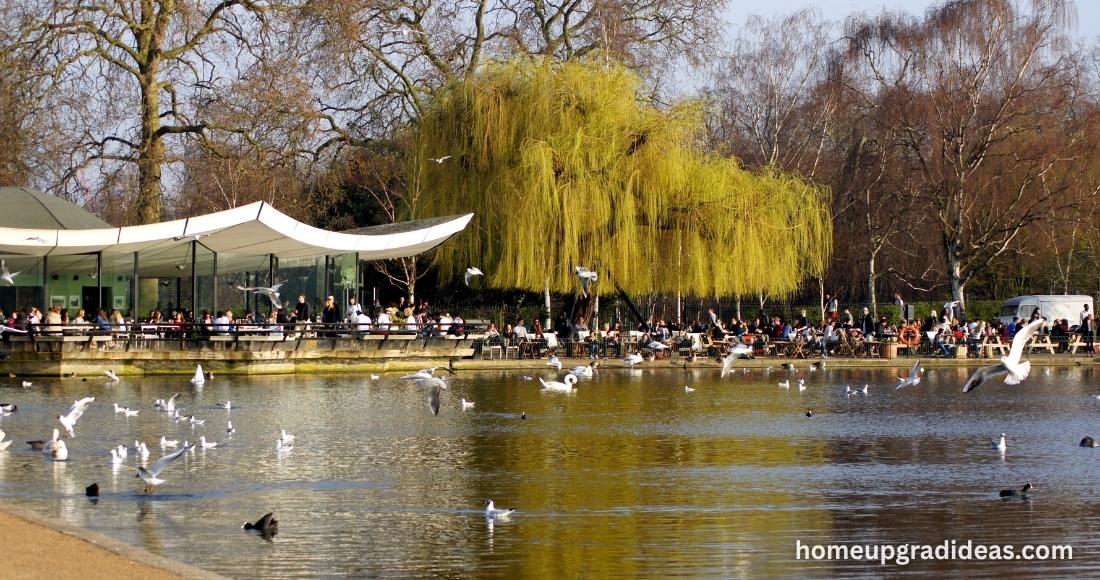
Drivers reach town easily off the M67 motorway, connecting straight to the M60 ring road and the A6 corridor, while regular buses arrive from Stockport, Ashton under Lyne, and Glossop.
Near the M67 slip road, you’ll find the bus station, a Starbucks drive thru, Quick Fit, and a small retail park home to B&M, Food Warehouse, and Asda.
Parking stays refreshingly simple, with plenty of free car parks and low cost car parks near the town centre, including at the Clarendon Shopping Centre.
Both Werneth Low Country Park and other local parks offer free spaces too, though on weekends those spaces fill up fast.
Hyde’s food scene mixes classic chippies and takeaways with excellent curry houses like Bay Leaf and The Raja, both firm local favourites of mine.
For something calmer, The Pavilion Café in Hyde Park or Little G’s Café serves homemade cakes and quality coffee worth stopping for.
Dining And Shopping
Traditional pubs such as The Sportsman and The Hare and Hounds near Werneth Low pour proper real ale alongside hearty meals in relaxed surroundings.
That’s a step up from the area’s older cheap curry houses, though both styles still have their loyal following across the town.
Shopping mostly centres on Clarendon Square and the surrounding town centre streets, mixing national brands with local butchers, discount shops, and independent boutiques.
The market stays a favourite for anyone chasing bargains or fresh local produce, and I still shop there myself most weekends.
Best Time To Visit And Local Events In Cheshire Hyde
Cheshire Hyde is genuinely worth visiting any time of year, though its parks and walking trails are at their best from late spring through early autumn.
Summer fills Hyde Park and Werneth Low with open air events, while autumn brings crisp air and golden foliage across the countryside.
Even in winter, when the town turns quieter, festive lights and warm local events keep spirits up right through the darker months.
Hyde Mela celebrates South Asian culture, music, and food with real energy, while the Hyde Music Festival brings out local bands and musicians.
Annual Highlights
The Christmas Lights Switch On adds a proper festive market with live entertainment and community performances every December without fail.
The solemn Werneth Low Memorial Services, held each Remembrance Day, pair quiet reflection with those unforgettable sweeping views across the valley.
I try to catch at least one of these events every year, since each one shows a different side of the town’s character.
Exploring Beyond Cheshire Hyde
From Cheshire Hyde, all of Tameside and the Peak District sit within easy reach, with Glossop just 20 minutes away acting as a gateway to the High Peak area.
Ashton under Lyne offers the Portland Basin Museum and its bustling markets, while Stockport, roughly 25 minutes out, holds the Hat Works Museum and Stockport Air Raid Shelters.
Shopping continues at Redrock and Merseyway, and adventurous travellers can reach the Sett Valley Trail, Kinder Scout, and Dovestone Reservoir within 30 to 40 minutes.
All these spots deliver that classic Peak District scenery, making Hyde a genuinely practical base for a longer weekend of exploring.
A Personal Walking Tour Of Cheshire Hyde
Walking down Market Street, I still point out my old photographic studio and shop, tracing back to my first base in Staley Bridge years ago.
Before selling his practice, my former landlord had been a solicitor. Afterward, I relocated to an office in the area, where I dealt with a good deal of wedding related work.
That work sat near a florist and a wedding gown shop, close to another photographer and a former camera centre, now a mini market.
The market area and main shopping precinct have changed hugely since my old cash converters and Mel Travel days, with banks shut down across the street.
The outdoor market shrank to tin sheds, and Clarendon Square still sweltered under its glass roof every hot summer heat, just like I remember.
So many empty shops turned into a charity shop or pound shop, though the cost of coffee never seems to drop no matter the season.
Familiar Faces And Old Shops
The indoor market still holds on, with Jer Jewelers and a small jewelry stall where I once bumped into old friends on a cruise through South America and Brazil.
Near the bus station, a decent chippy sits close to KFC, a small retail park, B&M, Food Warehouse, Asda, a Starbucks drive thru, and Quick Fit.
Further along, a shop selling fire surrounds and a lifelong fishing tackle shop run by Paul, doing engraving on trophies, both still stand strong.
Harold Shipman’s old surgery now houses a cheerful dance studio, Freedom Dance, where I once shot a wedding and did some careful editing afterward.
Further down, the old Barclays bank, a long standing restaurant, a run of antique shops, and several boarded up shops and cheap curry houses in Cheshire Hyde tell their own quiet story.
Why Visit Cheshire Hyde?
I always say Cheshire Hyde earns its place through industrial history, open green spaces, and its role as a gateway to Peak District exploring.
Those old cotton mills and textile production sites from the 19th century left behind architectural remnants and cultural remnants shaping its working class roots.
Yet modern Hyde keeps moving forward with fresh markets, green parks, and calm riverside paths that shape a gentler pace of life here.
This stretch of Tameside and the wider Cheshire countryside carries real community, seen through local festivals, football, and grassroots culture initiatives.
It may never become a polished tourist hotspot, but that unpolished charm and smart strategic location make Cheshire Hyde ideal for walkers, cyclists, and day trippers.
Anyone wanting a quieter alternative to the busier Peak District villages will find exactly that here, without losing easy access to the wider region.
FAQs About Cheshire Hyde
Is Hyde In Manchester A Rough Area?
Hyde feels like an ordinary, safe northern town, not unusually rough.
Where Is Hyde Located In The UK?
Hyde lies in Tameside, Greater Manchester, historically part of Cheshire.
What Are The Best Things To Do In Cheshire Hyde?
Visit Werneth Low, Hyde Market, canal walks, and Hyde Leisure Pool.
How Far Is Rochdale From Hyde?
Rochdale to Hyde covers roughly 12 miles across Greater Manchester roads.
What County Is Hyde In?
Hyde is located in Tameside, in Greater Manchester, and was historically part of Cheshire.